
How to Check a Gold Coin Before You Buy or Sell: A Practical Identification Checklist
A practical, non-hype checklist for checking a gold coin before a transaction: denomination, weight, dimensions, certification, and what to ask a local precious-metals specialist in San Francisco.
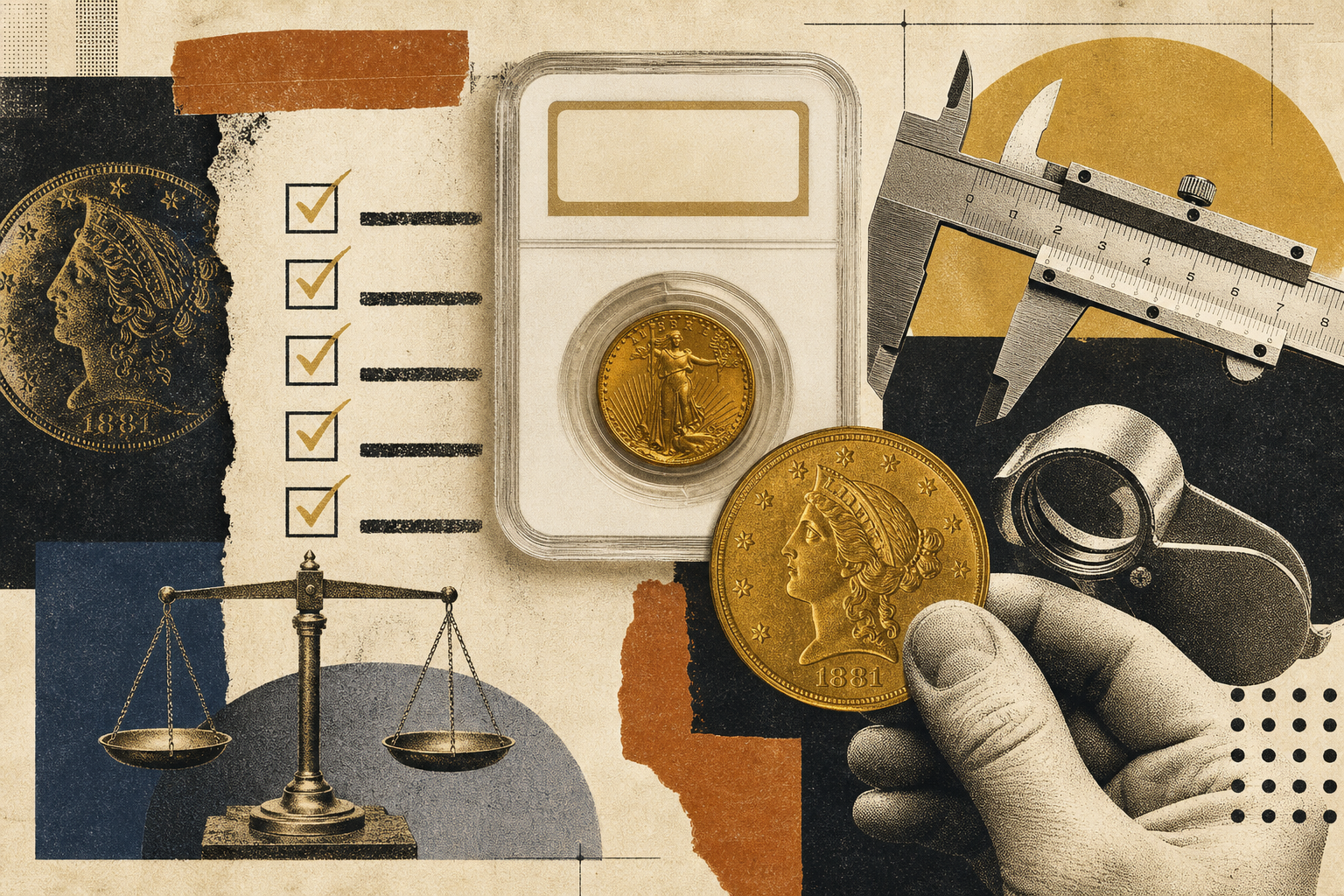
Gold coins can look straightforward at a glance, but a careful check matters before money changes hands. For Bay Area customers comparing shops, the useful questions are usually simple: What is the coin supposed to be? Is it certified? Does it match the listed weight and dimensions? And what process will the buyer or seller use to verify it?
1) Confirm the coin’s basic identity
Begin with the denomination, year, mint mark, and stated metal content. On many modern bullion coins, these details are standardized by the issuing authority. The U.S. Mint maintains official coin and bullion information, and official product details are the right place to start when you are comparing a coin to its stated specifications.
If you are evaluating a coin in person, the first job is not to decide whether it is valuable. The first job is to verify whether the coin matches the type it claims to be.
2) Compare weight, diameter, and thickness
A real coin should match the basic specifications for its series. Weight and dimensions do not replace a full authentication check, but they are a practical first filter. If a coin is far off spec, that is a reason to slow down and investigate further.
- Weigh the coin on a calibrated scale.
- Compare diameter and thickness to the published specifications for that series.
- Check edge details, since smoothness, reeding, or lettering can differ by issue.
- Look for signs of filing, filing marks, or unusual wear that do not fit the coin’s age.
3) Ask whether the coin is certified
Certification is not required for every transaction, but it can help reduce ambiguity. Third-party certification gives buyers and sellers a documented grade opinion and authenticity review from a grading service. For rare coins, certification is often part of the conversation because grade and originality can affect resale expectations.
If a coin is certified, check that the holder number, label, and grade designation match the listing. If the coin is not certified, ask what verification steps the shop will use before making an offer or completing a purchase.
4) Understand what a local shop may test
A transparent precious-metals shop should be able to describe its verification steps in plain language. Depending on the coin, that may include visual inspection, weight checks, measurement, magnet testing, or other non-destructive methods. For higher-value items, specialists may also compare the piece against known specifications and market reference data.
5) Be careful with pricing language
Before you buy or sell, separate the coin’s metal value from its collector premium. A bullion coin and a rare certified coin can be priced for very different reasons. Price discussions should also be tied to the actual coin in front of you, not a generic online chart.
For customers comparing offers, the most useful questions are: What is the coin’s identity? Is it certified? What grade or condition is being used? And what part of the price reflects metal content versus numismatic demand?
6) Know what to bring when you visit
If you are bringing coins to a San Francisco shop, a little preparation helps the process move cleanly. Bring any original packaging, grading inserts, receipts, or notes that came with the coin. If the coin is part of an estate or inherited collection, bring any inventory or written context you have. That background does not replace inspection, but it can help the specialist work faster and ask better questions.
- The coin itself, handled carefully by the edges when possible.
- Any certificate, holder, flip, or original box.
- Receipts, prior appraisal notes, or inventory lists if available.
- A clear list of which pieces you want reviewed first.
What a straightforward local review should feel like
A good in-person review should feel methodical, not rushed. You should hear what is being checked, why it matters, and what happens next if the coin is authentic, uncertified, damaged, or not the issue it was believed to be. That kind of explanation is especially important for first-time sellers and for anyone comparing several shops in the Bay Area.